RSHA

  • Home
  • About
  • Schools & Centres
  • People
    • Director
    • Executive
    • Professional staff
  • Study with us
    • Heritage and Museum Studies HDR Program
    • Graduate coursework
  • Events
    • Conferences
      • Past conferences
    • Past events
  • Research
    • Coombs Fellowship
    • Coombs Indigenous Fellowship
    • Coombs Fellows Archive
    • Lalor
  • News
  • Contact us

Networks

  • ANU Health Humanities Network
    • About
    • News and Events
    • Steering Group
    • Contact
  • Francophone Research Cluster
    • Publications
  • MemoryHub@ANU
    • People
      • MemoryHub Convenors
      • ANU Network Members
      • PhD Students
      • Visitors
    • Publications
    • Events
      • Symposium
      • Reading group
      • Webinars
      • Workshops
    • Contact us

Related Sites

  • ANU College of Arts & Social Sciences
  • Australian National Internships Program
  • School of Archaeology & Anthropology
  • School of Art & Design
  • School of Literature, Languages & Linguistics
  • School of Music
  • Centre for Heritage and Museum Studies
  • Humanities Research Centre
  • Institute for Communication in Health Care

Administrator

Breadcrumb

HomeNewsNew Book By Dr Tatiana Bur, Classical Studies
New book by Dr Tatiana Bur, Classical Studies

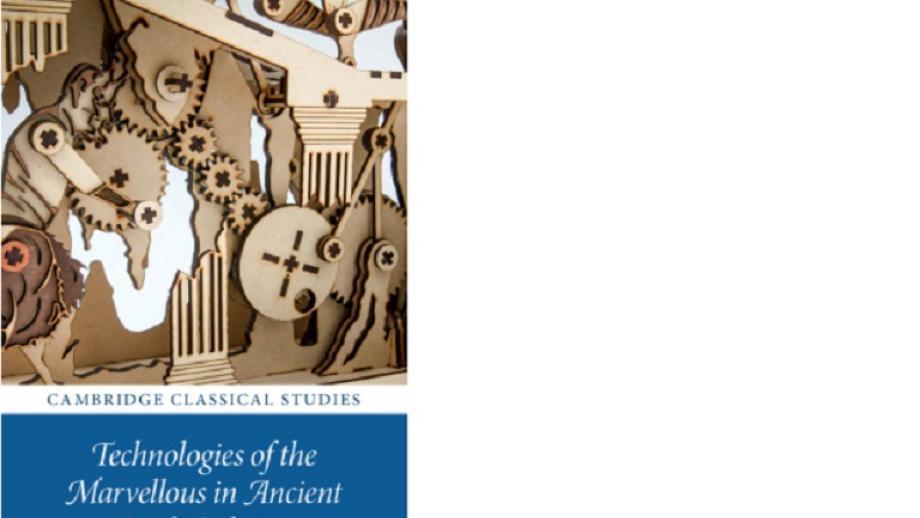
Technologies of the Marvellous in Ancient Greek Religion by Tatiana Bur

Tuesday 19 August 2025

Congratulations to Tatiana Bur on the publication of her monograph, Technologies of the Marvellous in Ancient Greek Religion, published by Cambridge University Press.

This open-access book investigates the ways that technological, and especially mechanical, strategies were integrated into ancient Greek religion. By analysing a range of evidence, from the tragic use of the deus ex machina to Hellenistic epigrams to ancient mechanical literature, it expands the existing vocabulary of visual modes of ancient epiphany. Moreover, it contributes to the cultural history of the unique category of ancient 'enchantment' technologies by challenging the academic orthodoxy regarding the incompatibility of religion and technology. The evidence for this previously unidentified phenomenon is presented in full, thereby enabling the reader to perceive the shifting matrices of agency between technical objects, mechanical knowledge, gods, and mortals from the fifth century BCE to the second century CE.

Hear Tatiana talk about the book on the New Books Network